Tuesday, November 5, 2024

Made for Love - Actively Engaged

We believe that children are not just passive recipients of environmental influences but are actively engaged with the environment with their own intentions and orientations, intellectual understandings, and emotions. In other words, children are active participants who contribute to their own development and understanding of the world. 

From a very young age, children show great curiosity about their environment. They actively seek out new experiences and explore their surroundings by observing, touching, manipulating, and, of course, putting objects in their mouth. Above all, they are interested in the primary caregivers and then later, other adults and children in their life. 

In addition, we often see children with physical disabilities demonstrate amazing adaptabilities. In spite of their physical limitations, they manage to find ways to communicate, to move around, to play, and to express themselves. Their desire to connect and communicate are made clear as they use gestures, sounds, eye contacts, etc. to engage with caregivers, peers, and toys. 

In general, children actively learn through social interactions. They enjoy engaging with caregivers, peers, and others around them. Educational research show that for children, cultural norms, language, and socially acceptable behaviors are all acquired through active participation in social life. 

Learning happens from children’s encounter with the social context mainly in the following three ways: First, children learn by observing and imitating what the others are doing. In our group homes, we often see older children voluntarily care for the younger siblings just as they have seen their group home parents do. 

Second, children learn through trial-and-error. Rather than passively waiting for instructions, they try to make sense of the environment by testing out new possibilities and see what the consequences are. For example, a young child sitting in a highchair may throw a toy and watch how it falls (and often what a caregiver responds). The child learns about gravity (and cause-and-effect, when the adult picks up the toy every time). 

Third, children learn from playing with others. This is especially true when children are involved in pretend play, where they recreate in play what they see, hear, and understand in their everyday reality.

Children do not just absorb whatever information is provided to them. Rather, they make sense of their everyday experiences based on their developmental levels and past experiences. This is why a similar situation may be interpreted and responded very differently by different children. 

An important implication is that children’s active engagement with the environment requires that people who work with the children be conscious of their different needs and preferences when trying to offer support. Our role as caregivers and educators is not to decide for children every aspect of their experience, but to prepare an environment that tailors to their individual differences in order to protect their natural curiosity, intellectual growth, and emotional development. 

The belief that “children are not passive recipients of environmental influences” helps us to rethink how we provide care, education, and emotional support in orphanage settings. Children are not merely shaped by their environment, but they actively reach out, interact, and make sense of the world around them with their abilities, preferences, and emotions. 


Monday, October 7, 2024

Made for Love - SEL Camps!

 This summer was a special one for us, as we held four Social Emotional Learning (SEL) summer camps. Apart from three groups of children living in orphanages, we also managed to extend our services beyond the orphanage and reach children from disadvantaged family homes. 


Why Social Emotional Learning?

Many of the children we work with have experienced hardship of various kinds. Some were abandoned at birth, and others come from environments of poverty, neglect, and chaotic family situations. These experiences leave emotional scars on the young minds and result in challenges of trusting others and maintaining relationships, emotion regulation, and low self-esteem, to name a few. When there are very few opportunities for counselling and therapy from qualified professionals, there is a pressing need to help these children acquire important social and emotional skills. This is where Social Emotional Learning (SEL) comes in!


SEL focuses on developing competence in five interrelated areas: self-awareness, self-management, social awareness, relationship skills, and responsible decision-making. These skills are essential for a person’s health and wellbeing, academic performance, as well as leading a meaningful and fulfilling life. 

SEL is important for all children. Particularly for disadvantaged children, SEL can help them recognize, name, understand, and manage emotions, build resilience, and develop healthy relationships. Through the SEL summer camp, we hope to empower the children and give them tools to address their emotional and social needs so that they are able to cope with the less-than-ideal circumstances and lay the foundation for a more promising future. 


A Week of Learning, Reflection, and Fun! 

Our five-day SEL summer camps were designed to be play-based and fun-filled. Each activity was planned to encourage emotional awareness, self-regulation, and social connection. The camps were a safe and supportive space for children to explore their feelings, bond with peers and adults, and have lots and lots of fun. We also made sure that the children were fully engaged by offering a teaching and learning style that is very different from the traditional “sit-and-listen”. 


Here is a sneak peek into some highlights from the camp: 

1. Fun warmup activities

Each morning, we started the camp with engaging activities to set a positive tone for the day. Depending on the children’s state of mind, activities vary from energizing games for moving around to peaceful games of listening and found. A very popular warmup activity is “What sheep/doggie are you feeling today?” This feelings check-in activity gave the children opportunities to recognize and describe how they felt and what contributed to it. It also helped the teaching staff to know what was going on in the children’s minds. 


2. Circle time for learning

Unlike the conventional classroom, all the key contents were presented in the daily circle time, including self-awareness, emotion awareness, emotion regulation strategies, and friendship. Apart from the brief delivery of content (usually limited to less than ten minutes every time) by the teacher, the classroom was set to be a shared space where the children were encouraged to tell their stories, experiences, or even create adventurous tales from their imagination. 


3. Film watching

Together we watched the first “Inside Out” movie, which became the starting point of our discussions about our own experiences with feelings. Together we explored the basic emotions, their different sizes, and how to manage them so that we do not explode and get others or ourselves hurt like an exploded balloon. 

4. Creative art-and-craft activities 

Through drawing, crafts, and dramatic play, the children were able to express themselves in non-verbal ways. This is very beneficial for children to process their emotions and gain confidence, especially for those who find it hard to articulate and manage their emotions. 


5. Social connection

Social awareness, social skills, and relationship skills were enhanced through a lot of fun and collaborative activities throughout the five-day camp, for example, balloon caterpillars, be-my-eyes, and build-a-figure. These games helped the children develop crucial social skills by learning how to communicate, collaborate, and support each other as a team. 


6. Getting people on the same page

A five-day camp is just the beginning of helping children develop social and emotional skills. Whether they can generalize what they learned largely depends on their everyday life situation. It depends on whether and how the important adults in the children’s lives can provide support in the process. For the camp for children from disadvantaged families we held an end-of-camp party and the parents were invited to celebrate the children’s achievements. We explained what the children had learned in the SEL camp. It was precious to watch the children proudly showing their parents all  that they had done! 


In one of the orphanages, we were able to organize a two-day training for the group home parents and after-school teachers. Together we discussed what the children had learned in the camp, explored how we adults understand and regulate our own emotions, and how to listen, understand, and provide emotional support to the children in our care. 


Reaching beyond orphanages

One of the four SEL summer camps were open for children from family homes in a rural area in China. While children in the orphanage face unique challenges, we recognize that many other children living with their families also endure hardship, because of poverty, loss of one parent, or emotional turmoil at home. As our new initiative, we hope to reach out to even more children, to provide them with resources and education, and to help them build the emotional and social skills they need to thrive. 


Looking Forward

This has been a remarkable summer for us as an organization. As we reflect on the SEL summer camps, we are full of hope for what we can offer the precious children in the future. The joy, connections, growth, and sparks in their eyes all remind us the importance of SEL for children experiencing adversity. 

Saturday, October 5, 2024

Small surgery, big impact!

 Eleven year old JM joined one of our foster families several months ago.  

JM was born with a cleft lip and palate, which were repaired when she was small.  When she arrived, one of the first things we noticed was that her speech was very unclear.  We knew that was a big issue that needed to be resolved quickly – partly because of the difficulty in communication, but also for her self-esteem and so that she would not be teased or bullied in school. 

JM was able to travel to Beijing for a pharyngoplasty, which is a surgery that changes the shape and function of the soft palate.  The day after surgery we could already see a huge improvement in her pronunciation.  It was amazing to see how proud she was to be speaking more clearly!


She is a quiet girl who likes to dance and loves making up her own dances.  She has a very introspective nature and can really focus on a task or project once she gets started.


We are excited to see what the future holds for JM.  And we're so grateful to our supporters who make it possible for JM to know the love of a family and receive life changing medical care.  

Tuesday, October 1, 2024

Launchpad Part 1 - A Young Man's Dreams

 Although our work has for many years focused on infants, toddlers and younger children, we have long been aware of the need to provide services to teens and  young adults with special needs.  It is an unfortunate reality that many disabled orphans will transition to adulthood lacking the skills and resources needed to lead meaningful and independent lives. 

This was made abundantly clear to us when we were approached last year by a teen named YJ who had been helped as an infant in our medical home and then spent many years in one of our group foster homes.  His orphanage had recalled all of their children several years ago, as policies changed and regulations tightened.  This young man was 17 years old, had significant physical disabilities, and a dawning realization that he was facing a lifetime of "imprisonment" and isolation within the walls of his social welfare institute. (*See note about "aging out" orphans below.)

YJ as an infant in our medical home

YJ shared his hopes with us... hopes of furthering his education and learning vocational skills, getting a job, a house, and maybe even someday getting married and having a family.  He wanted to be able to go shopping for himself, eat out at restaurants, go to church, the movies, meet up with friends, maybe even travel... in short, he wanted freedom to  make his own decisions and pursue his dreams.  Of course he could stay where he was, never have to work, and always have his meals and shelter provided.  But he knew that life would not be meaningful or fulfilling.  He felt a great sense of loss for what might have been, and longing for more.

YJ doing therapy (age 8)

We left that encounter haunted by what he shared with us.  We realized that YJ was not an isolated case.  The feelings that he expressed were certainly shared by many young adults in similar situations.  But what was the solution?  Was it even practical or realistic to think that he could escape the future that was looming before him?

We began brainstorming, and while the list of possibilities was endless, so were the challenges.  It has been many months of planning, preparation, and countless soul searching discussions with YJ and others like him. The result is a model that we believe will be successful in helping motivated young adults make the transition from passive recipients of institutional care to productive, capable members of society.   

And so came the inspiration for our newest program  - Launchpad.  Stay tuned for our next post, where we'll share more details about YJ and the other young adults who are part of our brand new Launchpad pilot program, and how we are helping them turn their dreams into reality.

YJ working on his studies this year (2024)

-------------------------------------------------

*We have heard from many who are interested in helping China's orphans (particularly adoptive parents) about their concern for "aged out" teens being turned out into the street and left to fend for themselves.  In our extensive work with countless orphanages over the past 30 years, we have never seen or heard of this ever happening.  This is because China's social welfare system is just that - a system of  social support for various groups of people in need, including abandoned children, those with mental illness, physical and intellectual disabilities, and the elderly.  Social welfare institutions exist to serve many different populations, not just abandoned children.


Tuesday, September 17, 2024

Happy Mid-Autumn Festival!

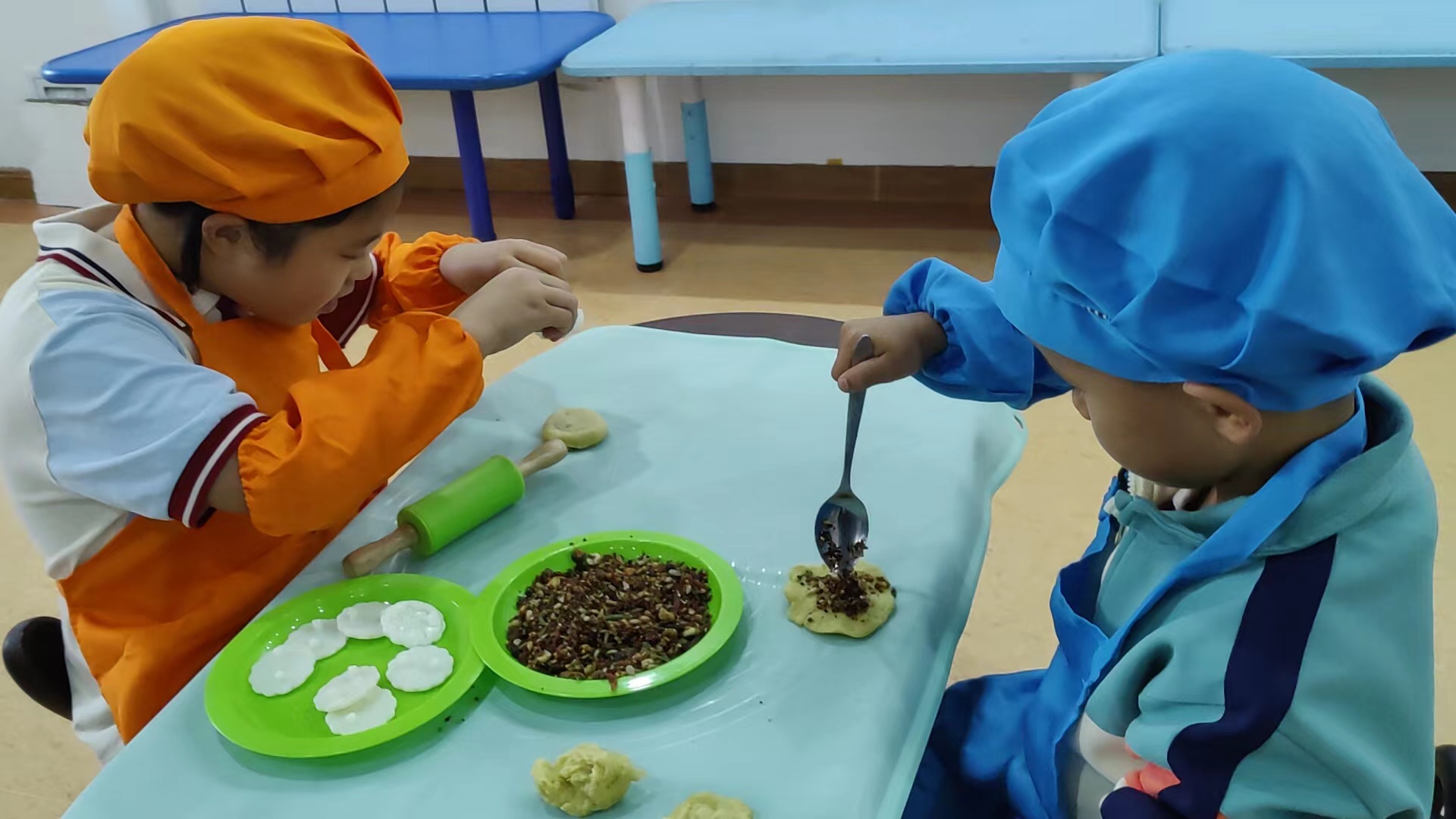
 We've been busy getting ready for Mid-Autum Festival... hanging lanterns and making mooncakes.  Do you know how to make mooncakes?  The little ones in our Classroom of Smiles are happy to show you how!

There are different types of mooncakes, and different ways to make them. Our little ones started by kneading and rolling out their dough:


Then you need to put the filling on top, and wrap it up.  We chose a sesame recipe because... well, who doesn't love sesame! 


After the filling is enclosed in the wrappers, the cakes are flattened slightly and pressed with a decorative stamp


Then they are cooked on a flat griddle:


Don't they look yummy?


Can confirm, we did a little taste testing and they are delicious!  But don't worry, we saved some to eat on the actual holiday, too!


Happy Mid-Autumn Festival!


Wednesday, September 11, 2024

A laundry day surprise...

Little JL was seven years old when he joined one of our foster families a year ago.  


JL was born with a cleft lip and palate, which were repaired when he was small.  He was transferred from a more rural area to one of our partner orphanages last year and they asked if he might be able to join our family model of care.   We were very happy to have JL join us, as we knew that being part of a family would make a big difference as he grew.


 JL is a curious boy, always asking questions and wanting to try things out for himself.  He's also very determined and independent, and this combination of traits can come sometimes lead to trouble!


JL loves tigers, rainy days and lollipops.  At school, his favorite class is math.  In the year that he has been with us we have watched him adjust to living in a family and make great strides in his maturity and development.


  His foster mom shared a recent incident that left her feeling overwhelmed with emotion: “JL was doing chores, and his task was helping out with laundry.  He was just about to start a load and noticed that there was a large wad of cash in the washing machine.  He immediately came to me and turned all of the money over.  I was amazed, because in the past he’s had the habit of taking things (sometimes even money) that don’t belong to him.  He didn’t even hide a little for himself, he gave me all that he had found!  As a reward for finishing his chores he chose an ice cream bar, which he enjoyed immensely.  He was very proud for doing his chores well and earning a small reward, but I was even more proud of him for his honesty and integrity!”


We are grateful to those who support our work.  We are humbled to be making a difference for children like JL, to know the love of a family and to learn values that will benefit him for the rest of his life.  


Wednesday, September 4, 2024

Made For Love - Behind Every Behavior...

 When we encounter behavioral issues in children impacted by traumatic experiences (such as abandonment, loss, and chaotic family situations), we believe it is crucial to remind ourselves that often, a child’s undesirable behaviors are triggered by unmet needs and/or trauma from the past.


Traumatic experiences often sabotage a child’s sense of safety and trust in adults. For example, Q spent his first few years in a traditional institutional care setting, where caregivers worked in shifts taking care of multiple infants. He was fed and changed regularly, but meaningful interactions were limited. Now at the age of 7, he loses his temper very often. This is not because he is defiant, or mean, but because the ability to self-regulate emotions develops through co-regulation with a trusted adult, which Q never had when he was little. 

Being mindful of how a child's past influences their present behavior means we need to be able to understand the lived experience of the child.

In our projects, we recognize that infants need meaningful interactions with consistent caregivers in order to learn to regulate their emotions.  Because of this we prioritize responsive, nurturing care for every child we care for, beginning as early as possible.


We provide trainings to our staff members to help them see beyond surface behaviors. To help the children heal and grow, we need to be careful and avoid pointing fingers at the child. Instead, we need to be curious and observant about what is really happening...

For example - one day, when all of the children were outside jumping rope, a staff member noticed Q was stomping his feet, pouting, and tears welled up in his eyes.

Staff: Hey, Q. You look upset. Could you tell me what is going on?

Q: No good! No good! I’m no good!!

Staff: Sounds like you are unhappy about something right now. What’s wrong?

Q: I can’t jump rope more times!

Staff: Ah, I see! You want to be able to jump more times than you already can. I saw you were doing great just now.

Q: But that boy over there can jump rope 100 times! But I can’t!!

Staff: Ah, that’s what you are upset about. … Really? Can he?

Q: Yes, he can! I saw it! Why can’t I do it? I want to do it! [Q is getting upset again.]

Staff knew the other boy was unable to do so. Maybe it was miscalculation? She decided to not debate with Q about whether the other boy could do so much.

Staff:: You really want to be able to jump rope like him, I see. You are 7 right now, and he is already 10. You are 3 years younger than him. Perhaps that’s why? Just be patient and keep practicing.

Q: But I WANT TO be like him NOW!! [Stomping feet]

Staff: It’s hard to be patient and you can’t wait anymore. [Q nodded]. How about you practice and practice every day, and I can watch you and help you count?

Q: OK!

Q cheered up, and started jumping rope again.


This is just a small episode in our everyday life where listening and attentiveness helps regulate a child’s emotion. When the staff member validated Q’s eagerness to excel and the feelings that came with it, his needs—to be loved, heard, accepted, to belong, to do well—were being met. He also learned that adults can be trusted. Of course, he still has a long way to go, and it is but one small yet critical step of helping him learn to regulate his emotions.

*********

Loving a wounded child requires the child feel seen, heard, and understood. We are devoted to creating a safe and nurturing environment where opportunities are provided every day for the child to freely express themself. 


We as adults are there to listen, to help them make sense of their emotions, and to teach them to master healthy coping mechanisms. As we listen to and understand a child’s unique experiences, we respect their dignity, promote their sense of belonging and self-worth, and support their development and well-being.