Friday, May 11, 2018

Qi's Transformation


Our volunteer physical therapist, April, has helped many children in our program catch up on their physical and developmental milestones. In this post, she shares of a recent transformation she witnessed in one of our newer babies, Qi.

Transformation. It is one of the things that continues to draw me to orphan work. I never grow old of seeing the degree to which optimal care and love can impact a child.

Meet little Qi.


We first met her at a train station. Some orphanage staff brought her and another baby boy to a colleague and I as we were traveling back to Beijing from one of our other projects. It was a quick handoff: two babies and a bag with a few diapers, formula, and a bottle for them to share. We knew very little about either one of them other than their names, birthdates, and that they were joining our project for further evaluation of their medical conditions; they each had visible ear deformities.

Qi didn’t love being in a baby carrier. She didn’t especially enjoy being held. She’d fuss intermittently during bottle feedings, likely frustrations related to her poor oral motor skills; more milk spilled out of her mouth than went in, and what went in easily caused her to cough or choke. She cried a decent amount that first train ride, before eventually tiring herself out and falling asleep.


Qi weighed just shy of 12 pounds when she arrived at our Beijing baby home, placing her below the 3rd percentile for her age of 6 ½ months. From a developmental perspective, Qi wasn’t doing much better; her developmental motor skills were quite delayed. Her favorite position was on her tummy, where she would rhythmically lift her legs off the surface over and over again while staring blankly into space. She wasn’t motivated to roll over. If you tried to sit her up, she was like a noodle– her trunk would completely flex over your hands. She couldn’t put any weight on her legs if you placed her in supported standing. She wasn’t crawling. She actually preferred not to be held; she’d often fuss in someone’s arms and be too content in her crib.


Given Qi’s bilateral microtia, we weren’t sure about her hearing. Her affect was generally quite flat, but it was hard to tell if this was a result of her previous environment and lack of stimulation and/or her inability to hear. After her first medical check, however, we discovered she did have some limited hearing bilaterally, although likely very muffled.


Fast forward just a few weeks and Qi has made tremendous progress! She’s more easily drinking and enjoying her bottles. She’s now 15 pounds and her entire body has started filling out. She can roll in both directions, put weight on her legs in supported standing, and sit with minimal support. She can pivot around on her tummy, has mastered army crawling, and can briefly get on her hands and knees. Her interest in toys has definitely replaced her contentment with nothing.


Qi enjoys social interaction like being talked and sung to. She is growing more engaged in her environment daily, especially now that she has her hearing aids. She’s even starting to vocalize!


My personal favorite changes in Qi– how she recognizes and smiles big when I pick her up in the mornings or how she no longer resists being held and will even crawl over when she wants to be picked up. And how she easily falls asleep in my arms.


This little one has come a long way in a short amount of time and it’s transformations like hers that keep me coming back for more. I look forward to seeing what Qi will be up to a few months from now and hopefully someday in her own forever family.


Monday, April 30, 2018

Scars Run Deep

Many of the children in our program have physical scars. And for many of these children, their scars represent one or more life-saving surgeries. A scar down the front of one child’s chest represents open heart surgery to repair a septal defect… a scar across another one’s abdomen represents a previous colostomy and subsequent reversal for anal atresia. Ying and Cheng are just two children who have physical scars from their life-saving surgeries. 


Scars are a normal part of the wound healing process and can be a reminder of a more critical period in a child’s medical history. Interestingly, scars can take up to 2 years to fully mature.

For infants and young children with a lot of growing yet to do, the mobility of a scar can be critical too. Scar mobility (or lack thereof) can further impact a child’s overall growth and development. Surgical scars run deep and scar tissue can adhere to any underlying structures–  connective tissue, muscles, tendons, blood vessels, nerves, organs, and bones. These adhesions can restrict movement and function. Scars can also be hypersensitive to touch, producing visceral responses (nausea/vomiting) in the most extreme situations. Scars obtained in infancy/early childhood can negatively impact various body systems (musculoskeletal- posture, cardiopulmonary- breathing, internal organs- digestion, etc.) as children continue to grow.


Recently we did a scar management training with the nannies in one of our baby homes. We had the opportunity to look at different children’s scars, assess their mobility, and demonstrate how to perform scar massage to prevent complicating adhesions. We can’t remove the scars from these children or change their past medical history, but we can help ensure these scars won’t further impair movement and function as they continue to grow and develop.

Friday, April 20, 2018

Siblings

The advantages of being an only child are many. No matter which way you turn, the child enjoys all the toys, goodies, love and attention. This kind of happiness might seem perfect, but being an only child removes the opportunity to experience both the rivalry and love between siblings!


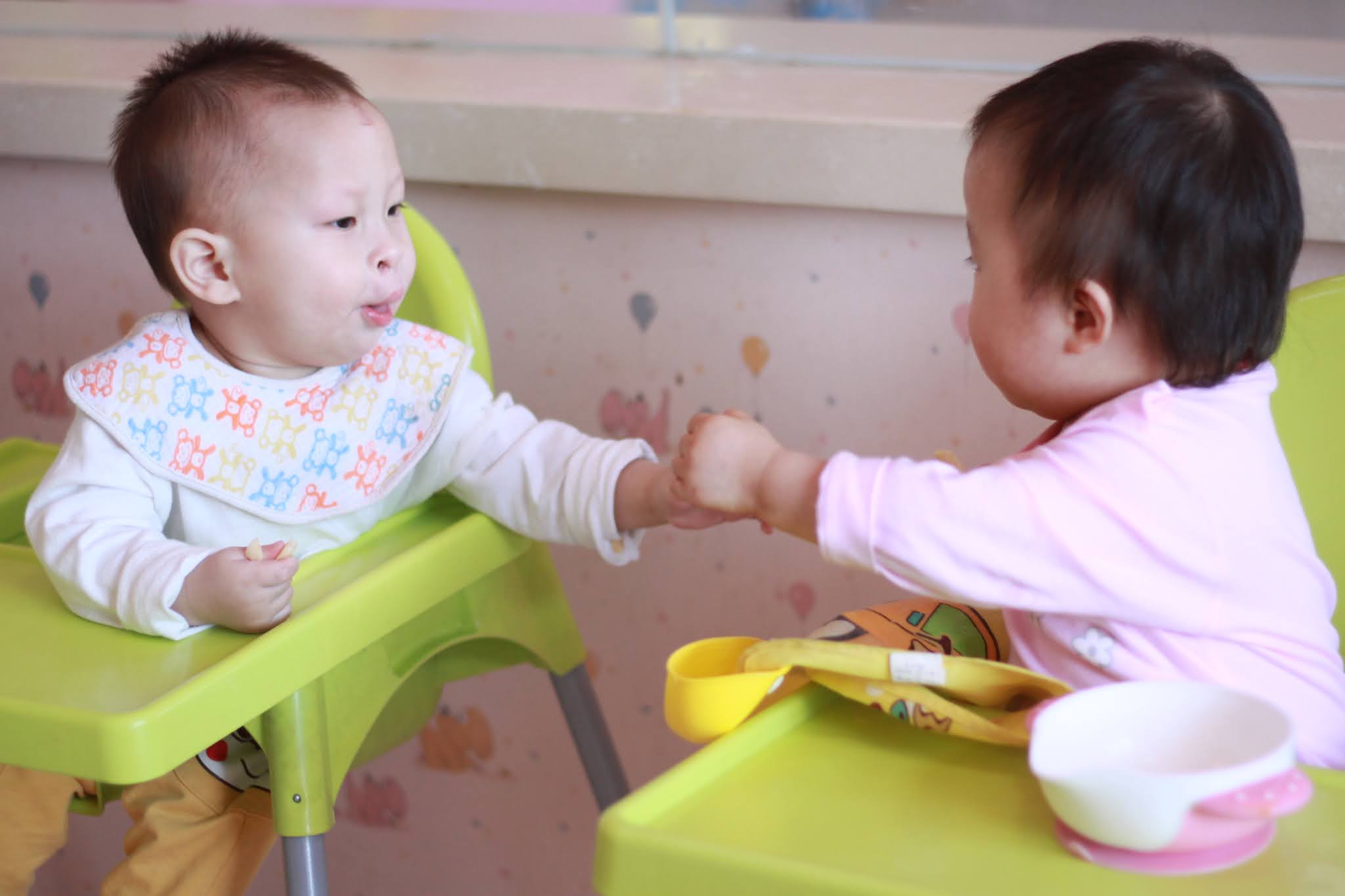
It can be easy to think children living at Dew Drops, who have been abandoned at birth due to their congenital medical issues, as being alone. But actually, we at Dew Drops believe that it is very important for the children in our care to grow up in an environment that emulates a family. Therefore, children are grouped into little homes with a primary caregiver and “siblings.” They are also taught to model the love their nannies give them.


When there is love, siblings can learn to play together. When they fight, they shove and push each other! A toy can be shared by two siblings who get along and then, that same toy can be what drives two siblings upset at each other! This is very common in any household with many children. At the end of the day, the siblings learn to accept each other and forgive. The love and bonds that form between siblings is very unique.

Monday, April 2, 2018

So Much Happiness from One Apple!

Can one apple satisfy you? There are many kinds of apples available – green apples, red apples, yellow apples – all are delicious but can they bring you happiness? Obviously, we are simply talking about edible apples, not the famous Apple products that many can’t live without!

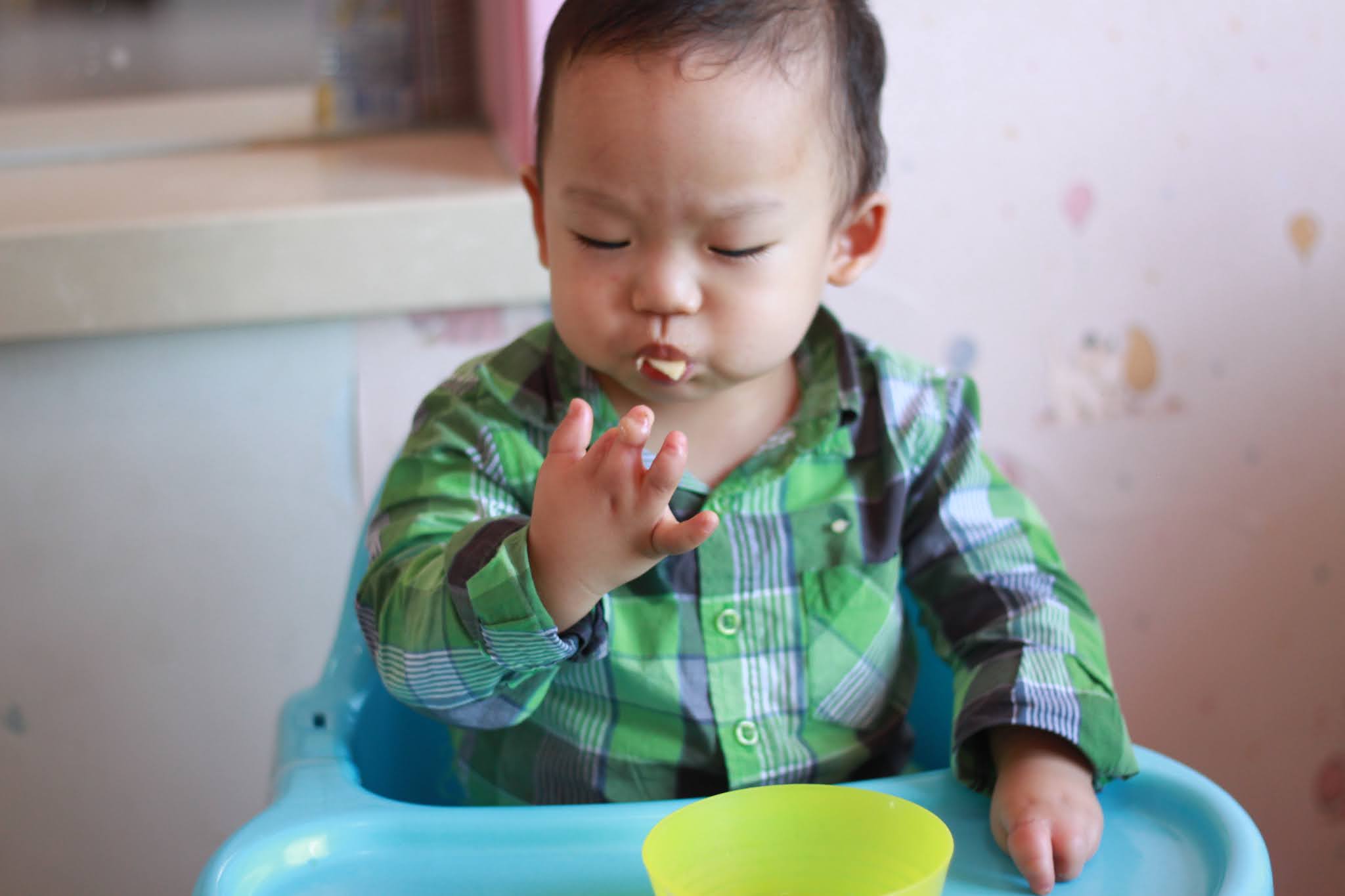
During snack time, all the children sit in their highchairs to eat various kinds of fruit puree. For the children that are still learning to use a spoon to feed themselves, it usually takes a little time for the nanny’s to work their way around the group and feed every child. So what should they do while they wait? Here we have a great opportunity to give the older children an activity that encourages the use of their fingers and also improves their chewing ability. Today, our helper snack is an “apple”. This apple is going to help the children develop their fine motor skills with their fingers and also foster friendship and joy among them. Don’t believe us, just look for yourself!

Te Te has already had successful surgery for his cleft lip and palate. He eats an apple with a big smile:


No Longer needing a colostomy bag, Zong Zong shows off his apple eating skills


Han has already had treatment for her arthrogryposis and is making great strides in her development. Look at her use her hands to grab these apple slices:


Sweet Hui doesn’t let her growth asymmetry get in her way of having some fun! This is how she eats an apple:


After 4 successful GI related surgeries, Zhen is a happy boy who shows us how he eats an apple today:


Yao has already had two surgeries to separate his fingers. Here he shows us his skill at eating an apple:


Even while the children show off their skills of feeding themselves, they don’t forget to share!


Little ones, how does a simple apple bring you so much joy and happiness? Is the apple really that delicious?!

The children’s satisfaction with merely an apple shows that they know how loved and cherished they are. Children that are loved, live in gratitude and satisfaction.

There are so many wonderful things in this world. What brings you satisfaction? May the children’s smiles bring you happiness and satisfaction today!